

Trader Joe’s Korean Japchae Fried Rice Review
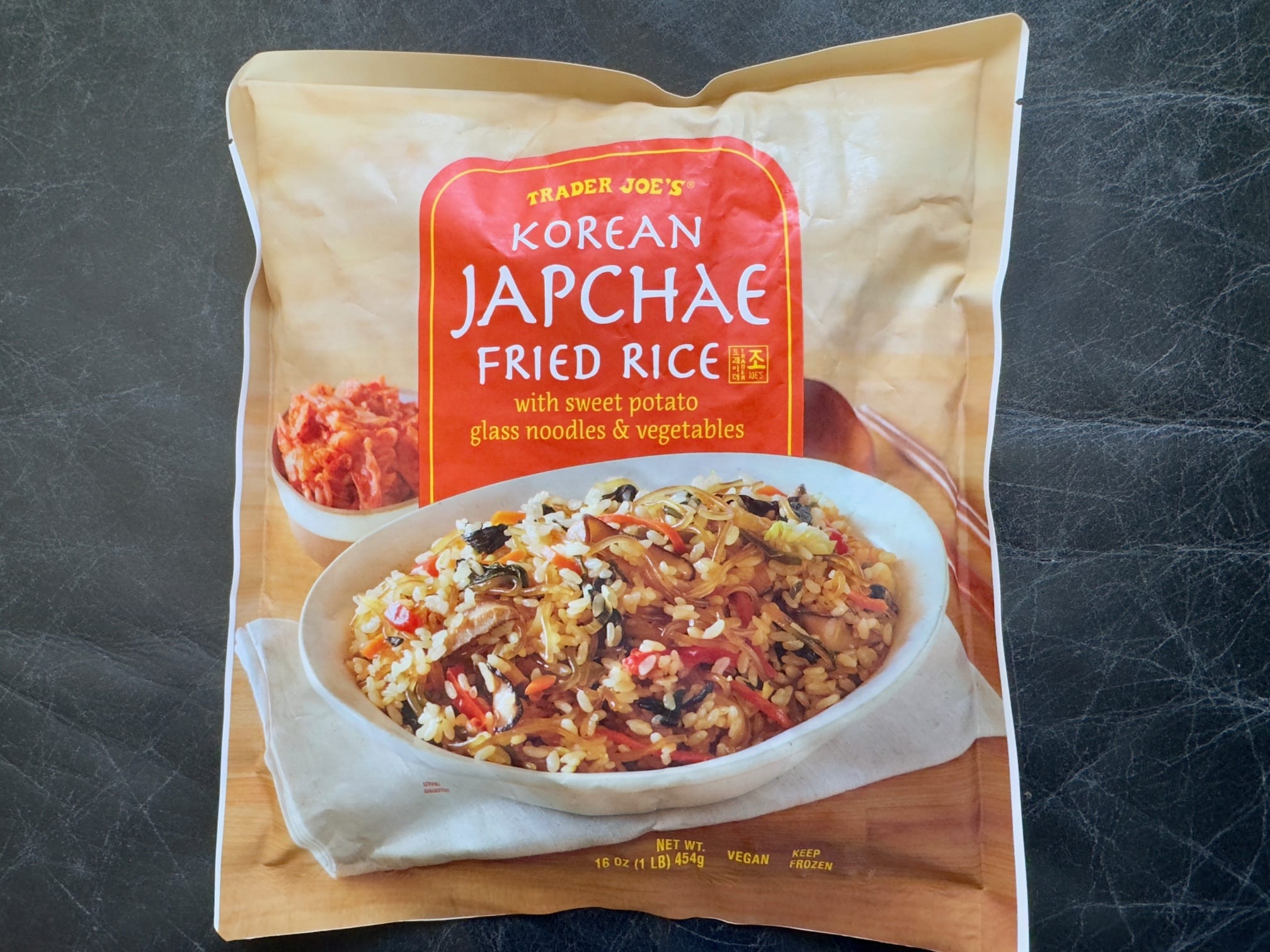
The frozen food aisle’s ambitious attempt at Korean fusion, or: How I learned that sometimes good ideas need a little help
Confession time: I bought this thinking it would redeem TJ’s previous Korean food missteps, kept my expectations cautiously optimistic after their regular Japchae sodium bomb situation, and now I’m genuinely conflicted because it’s actually… pretty good? Just not complete.
Here’s the thing about TJ’s Korean Japchae Fried Rice: it comes with a full historical dissertation about the Joseon Dynasty and royal banquets on their website because apparently nothing says “authentic Korean experience” quite like a microwave meal with a history lesson. But sometimes the most ambitious experiments yield the most interesting results, even when they need a little help to get there.
The Bottom Line Up Front
Rating: 7/10 – It tastes genuinely good and looks beautiful, but feels like they shipped it before adding the protein and dialing back the salt.
Best for: Vegan Korean food lovers, people who like playing food stylist with their add-ons
Skip if: You want a complete meal without DIY upgrades, watching your sodium intake
Real talk: This is delicious foundation food that’s begging you to finish what they started
Wait, What’s Japchae Again?
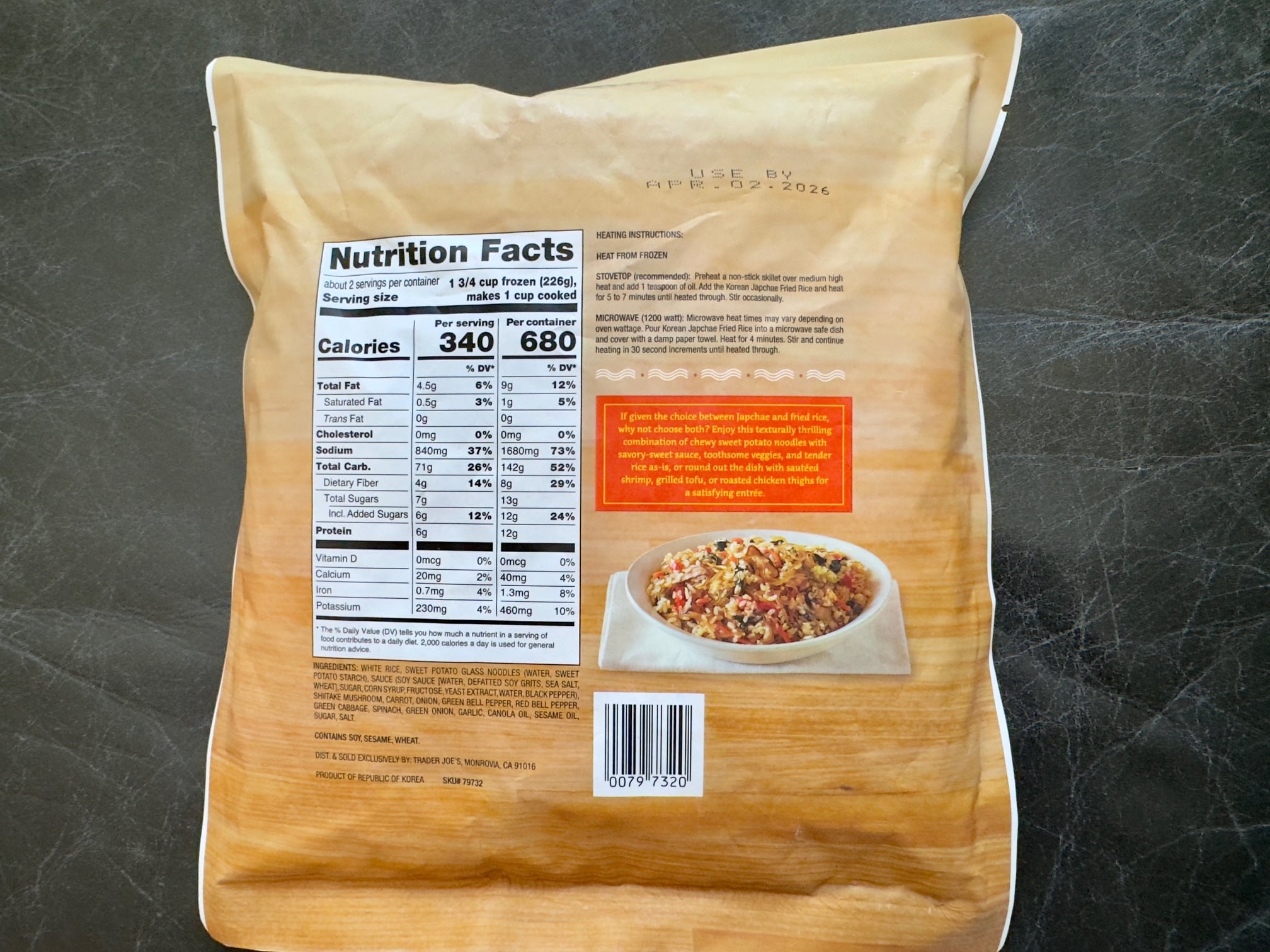
Originally created during Korea’s Joseon Dynasty as a fancy royal dish for special occasions, japchae (literally “mixed vegetables”) is one of Korea’s most beloved comfort foods. The star of the show is dangmyeon, those clear, chewy sweet potato glass noodles that look like transparent ribbons and have a uniquely bouncy texture. Traditional japchae is stir-fried with an assortment of colorful vegetables like spinach, carrots, and mushrooms, all tossed in a sweet-savory sauce made with soy sauce and sesame oil. It’s typically served at celebrations like birthdays and weddings, and while it started as a vegetable-only dish centuries ago, modern versions often include beef or other proteins. The beauty of japchae lies in its balance, the noodles provide substance, the vegetables add color and nutrition, and that signature sesame soy seasoning ties everything together in perfect Korean harmony.
Quick Dietary Detective Work (Because We Know You’re Speed Reading Labels)
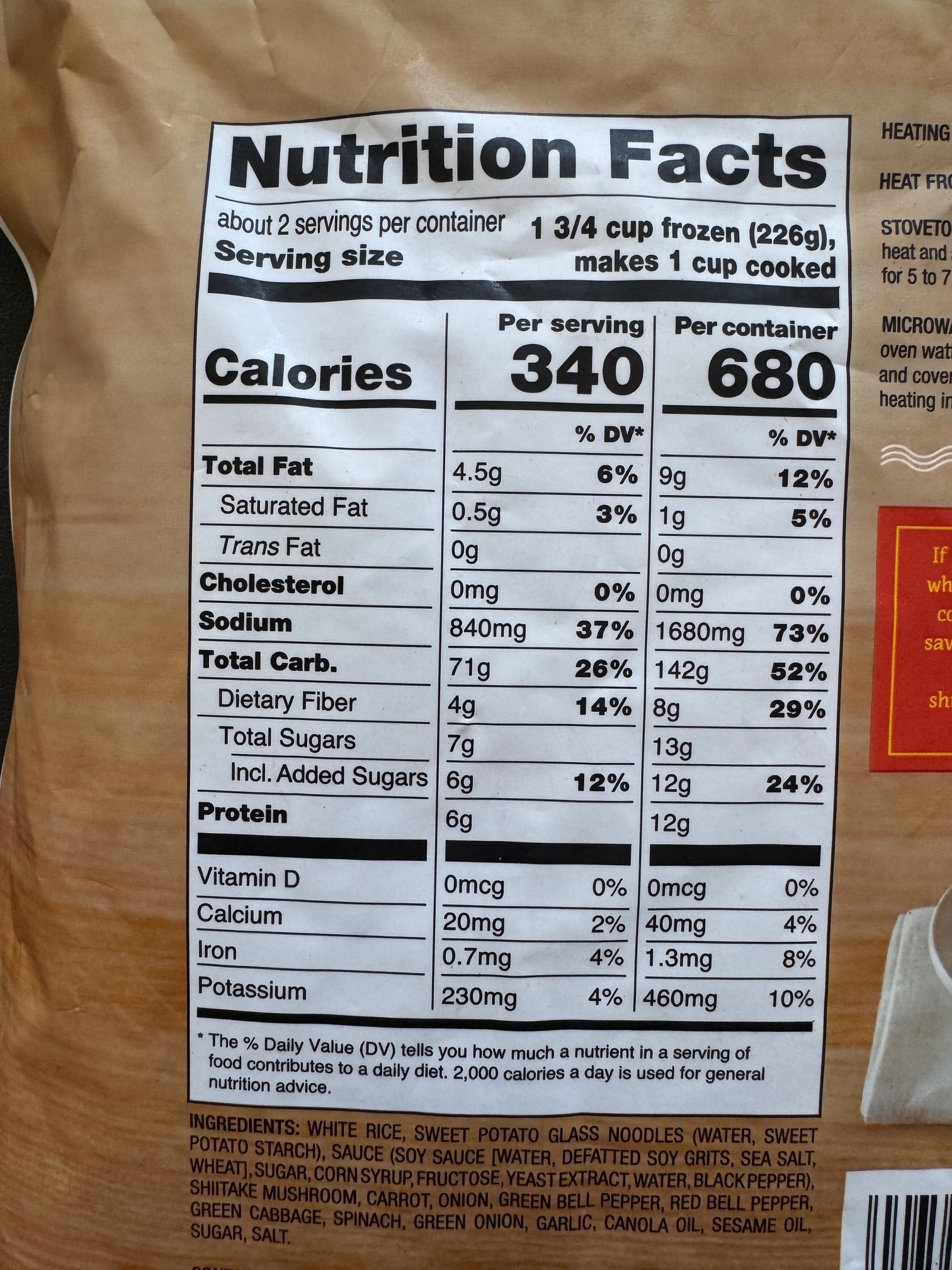
✅ IS vegan (surprisingly rare for Korean inspired dishes!)
❌ NOT gluten free (wheat in the soy sauce says absolutely not)
❌ NOT kosher (no certification spotted)
⚠️ Sodium alert: 840mg per serving (37% of your daily limit)
⚠️ Light on protein: Only 6g per serving (you’ll need backup)
Busy parent translation: This works for your plant based teenager but not your gluten sensitive spouse, and everyone’s going to need some protein on the side.

The Wok Magic Reality Check
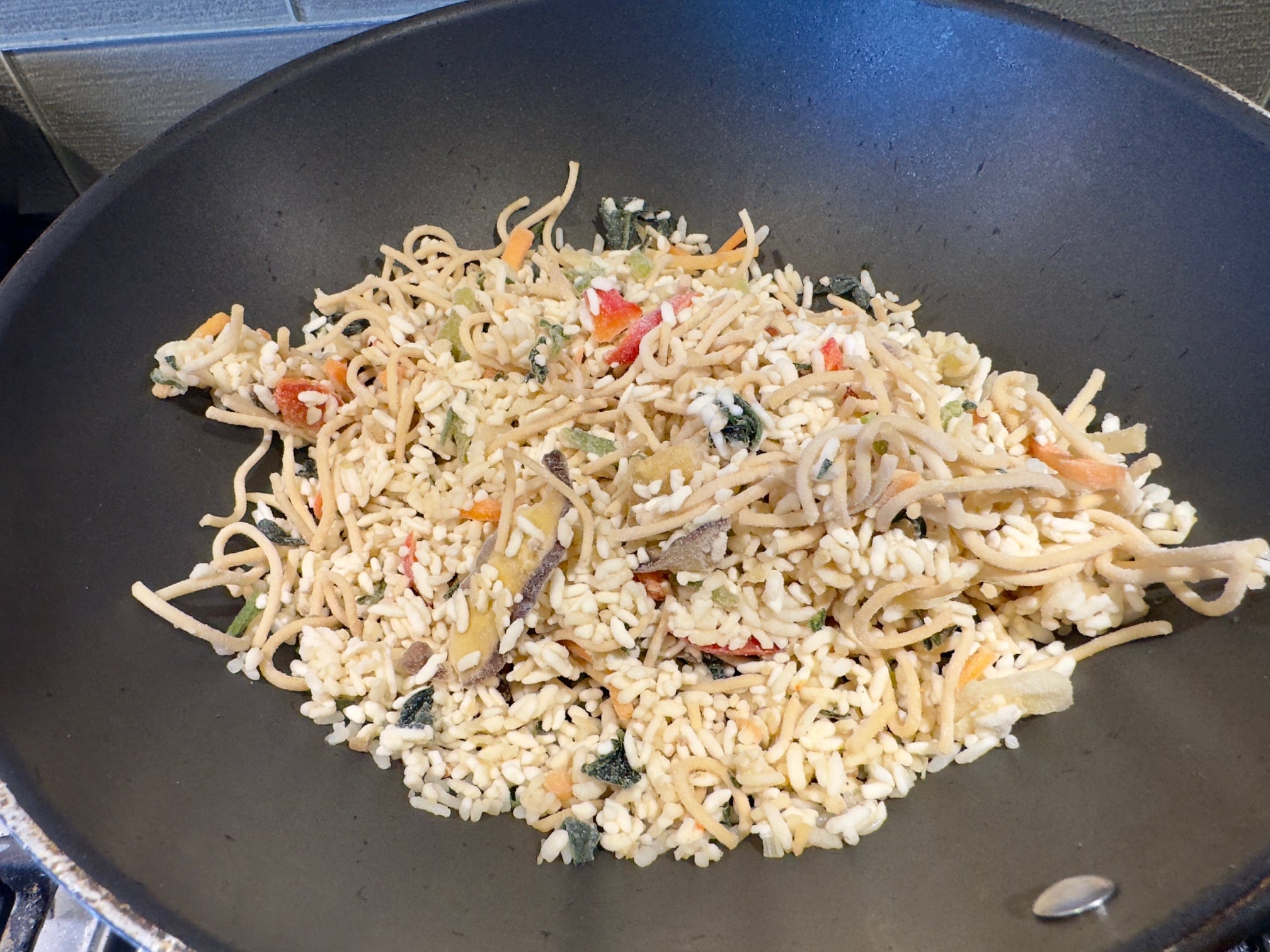
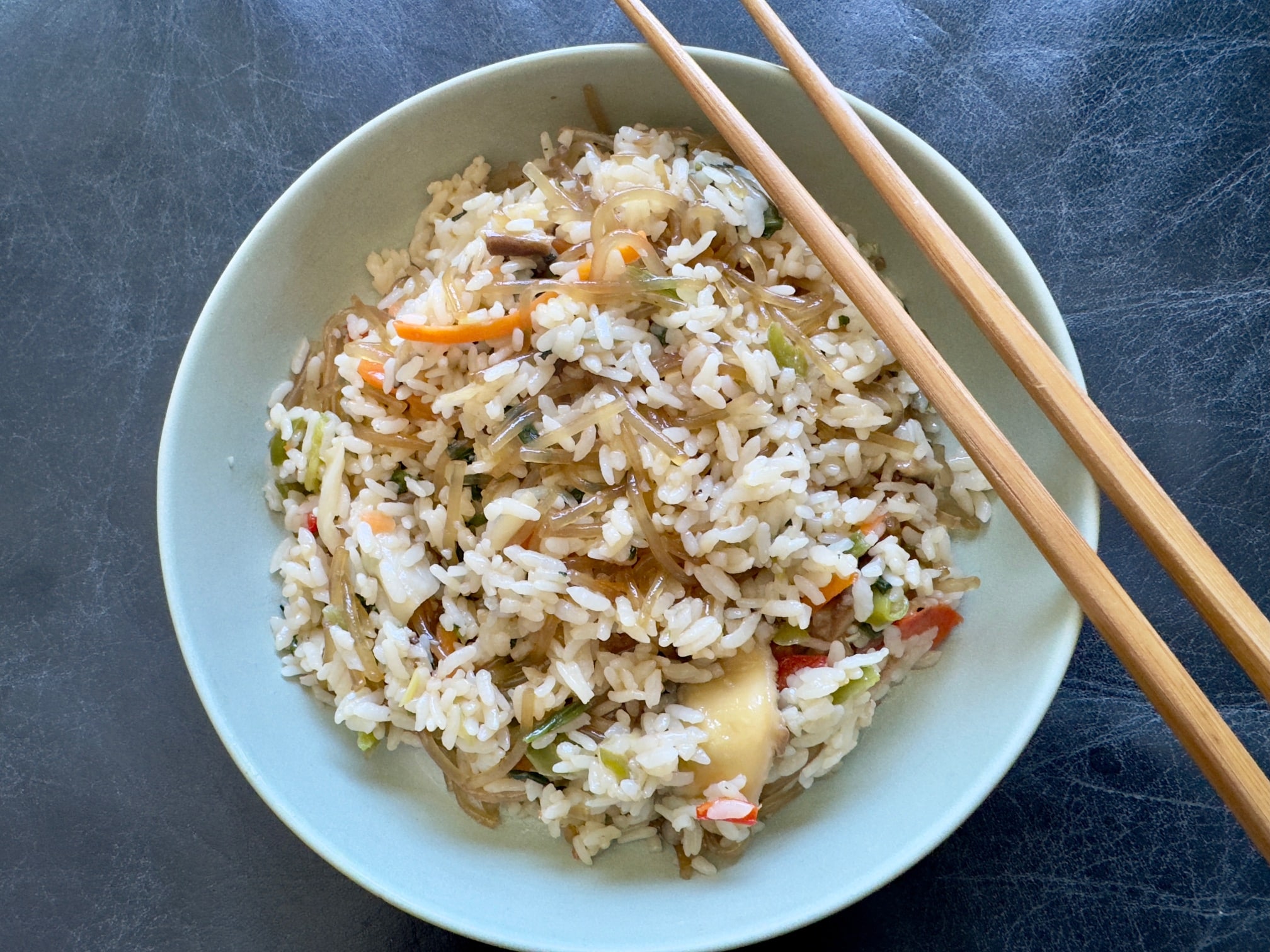
Finally! A TJ’s frozen dish that actually benefits from real cooking instead of microwave surrender. I fired up my wok with a bit of oil, and this transformed beautifully in about 7 minutes. No weird cold spots, no rubber noodle disasters, just proper stir fry action that actually looked like food when I plated it.
The foolproof method:
- Heat your wok or large skillet with a splash of oil
- Add the frozen mixture and let it work its magic for about 7 minutes
- Stir occasionally like you’re conducting a very important kitchen orchestra
- Marvel at how good this actually looks and smells
Pro tip from the trenches: The aromas coming off this are legitimately amazing: sea air, garlic, sesame oil and perfectly cooked vegetables. It’s the kind of smell that makes you feel like you actually know what you’re doing in the kitchen.
The Identity Crisis That Actually Works
Unlike their original Japchae which is all glass noodles and vegetables, this version combines white rice with glass noodles in true fried rice fashion. The vegetables come in smaller, fried rice sized chunks rather than the long strips of the original, and there’s even some seaweed in the mix for that extra umami depth.
What you’ll find:
- The rice and noodle combo works surprisingly well—different textures that complement each other
- Shiitake mushrooms adding actual depth (not just button mushroom sadness)
- Proper fried rice vegetables in bite sized pieces that make sense
- Beautiful visual presentation that doesn’t look like frozen food shame
The Flavor Reality Check: Actually Impressive
Here’s where I have to give credit where it’s due—this tastes really good. The flavors are well balanced, the vegetables maintain their dignity, and the whole thing has that satisfying umami depth you want from Korean food. Since it comes from a Korean supplier, there’s an authenticity here that you can actually taste.
The Portion Reality: Filling But Feels Incomplete
At 340 calories per serving and 680 for the whole bag, this will actually fill you up, I ate the entire thing and felt satisfied. But here’s where things get complicated: it feels like half a meal. It’s lacking protein at only 6g per serving, which makes this feel more like a really good side dish than an actual entrée.
The “Half Finished Product” Problem
This is where my rating takes a hit. TJ’s literally suggests serving this with a fried egg on top, which feels like them admitting they didn’t finish the job. It’s delicious foundation food that’s crying out for completion. You’re going to want to add:
Essential upgrades:
- A fried egg (as TJ’s suggests—they know what’s missing)
- Some gochujang or chili oil (bring your own heat)
- Actual protein like chicken, shrimp, or tofu
- Maybe some kimchi on the side for authenticity points
The DIY reality: You’re basically buying expensive ingredients to cook a meal yourself, which defeats some of the convenience factor.
The TJ’s Korean feast strategy: If you’re going full Korean meal mode, this pairs beautifully with their Beef Bulgogi for protein, Vegan Rice Balls for variety, or Kimbap for a complete Korean spread. Suddenly this feels less like an incomplete meal and more like the centerpiece of a Korean feast.
The Sodium Situation: Déjà Vu All Over Again
Remember how I dinged their original Japchae for excessive sodium? Well, they didn’t learn. At 840mg per serving, this is still pushing the limits of reasonable salt intake. You definitely don’t need to add any soy sauce—the sodium is already there, just not overwhelming your taste buds.
Salt reality check: If you eat the whole bag (which you probably will), you’re getting 1,680mg of sodium—that’s about 73% of your daily limit in one meal. TJ’s really needs to figure out this Korean food sodium situation.
Value Proposition: Good Ingredients, Incomplete Experience
At $3.99 for 16 ounces, this is reasonable pricing for quality ingredients from Korea. The problem is you’re paying for a foundation that requires additional investment to become a complete meal. By the time you add protein and heat elements, you’re looking at closer to $6-8 for dinner.
Cost breakdown reality:
- 25¢ per ounce for the base (reasonable)
- Add protein costs (egg, chicken, tofu)
- Add heat elements (gochujang, chili oil)
- Total investment approaches restaurant pricing
The Final Verdict: Beautiful Foundation, Needs Finishing
Trader Joe’s Korean Japchae Fried Rice is like that friend who has amazing potential but needs a little coaching to reach it. The flavors are genuinely good, the visual presentation is beautiful, and coming from Korea gives it authenticity that you can taste. But shipping a meal that basically requires you to add protein and heat feels like they stopped at 75% completion.
It’s delicious as far as it goes, but it goes maybe three quarters of the way to being an actual dinner. The sodium levels show TJ’s still hasn’t figured out how to do Korean food without overdoing the salt, and the complete lack of heat in what should be spicy cuisine feels like playing it too safe.
Would I buy it again? Probably, but only when I’m planning to make it part of a larger Korean meal with multiple components. As a standalone dinner, it feels incomplete despite being genuinely tasty.
Final Rating: 7/10 – Great flavors held back by being a half finished product
Perfect for: Korean food lovers who enjoy customizing, vegans seeking authentic flavors, anyone building elaborate rice bowls
Bottom line: Sometimes the most frustrating meals are the ones that are almost great. This has all the right flavors but needs you to finish what they started.
Leave feedback about this